
 REQUEST A QUOTE
 EN
EN English
Just let we know what you want, and we will get in touch with you as soon as possible!

How a Radial Stacker Reduces Rehandling Costs in Aggregate Plants
In aggregate plants, rehandling is one of those costs that hides in plain sight. It doesn't always show up as a single line item, but it quietly eats into margins every day—through fuel consumption, equipment wear, labor hours, and lost efficiency.
If you've ever watched a wheel loader spend hours pushing material away from a growing pile just to make room for more, you've seen rehandling in action.
This is exactly the kind of inefficiency a radial stacker is designed to eliminate—or at least dramatically reduce.

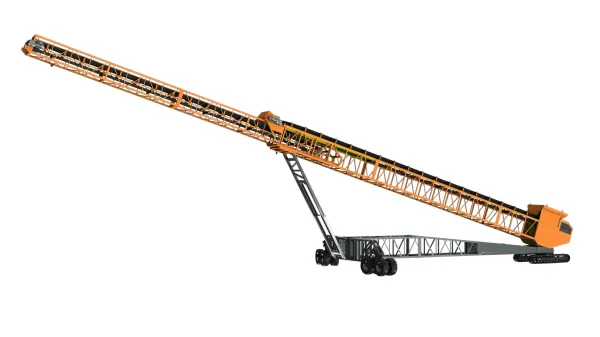
This is a radial stacking conveyor for stacking bulk coal.
What "Rehandling" Really Means on the Ground
Before getting into solutions, it's worth defining the problem in real terms.
In a typical aggregate plant using a fixed conveyor discharge:
- Material drops in one spot
- A cone-shaped pile forms quickly
- Space runs out
- A loader or dozer is brought in to move material outward
That movement—pushing, scooping, relocating—is rehandling.
And it comes with costs:
- Fuel burned every hour
- Operators on payroll
- Wear and tear on machines
- Extra dust and material degradation
Multiply that across shifts, weeks, and seasons, and it adds up faster than most people expect.
The Simple Idea Behind a Radial Stacker
A radial stacker approaches the problem differently.
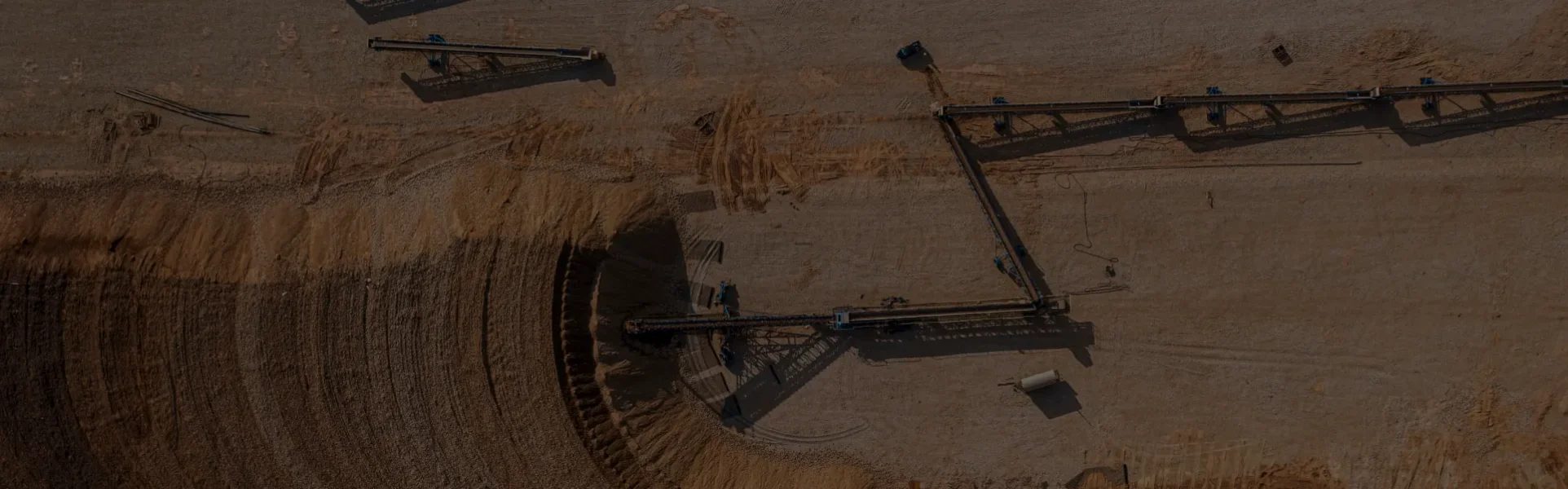
Instead of dumping material in a single fixed point, it rotates slowly around a محور (pivot), spreading material in a wide arc. The pile grows outward naturally, not just upward.
That one change—movement at the conveyor instead of movement on the ground—completely reshapes how stockpiling works.

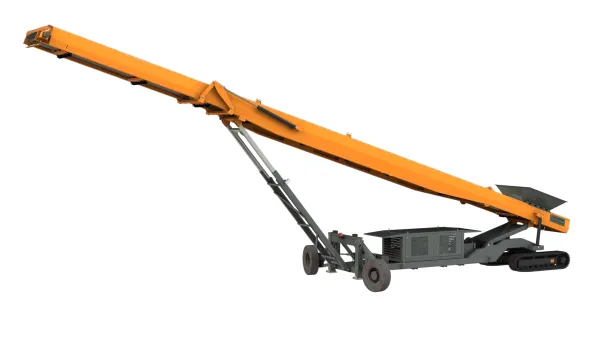
This is a radial telescopic stacker for aggregate plant.
1. Less Loader Work, Less Fuel Burned
Let's start with the most obvious impact: fuel savings.
When a radial stacker distributes material evenly:
- Loaders don't need to constantly push piles outward
- Dozers aren't required to reshape stockpiles
- Machine hours drop significantly
In many aggregate plants, loader fuel consumption tied to stockpile management can be reduced by a noticeable margin—sometimes dramatically, depending on throughput.
And fuel isn't just a cost—it's a volatility risk. Reducing dependency on it adds stability to your operating expenses.
2. Fewer Machine Hours = Lower Maintenance Costs
Every hour a loader runs is another hour closer to:
- Tire replacement
- Hydraulic servicing
- Engine wear
- Scheduled maintenance downtime
By cutting down rehandling, a radial stacker effectively extends the working life of mobile equipment.
Operators often notice:
- Longer intervals between maintenance cycles
- Lower spare parts consumption
- Reduced unexpected breakdowns
Over time, that translates into real savings—not just in money, but in operational headaches.

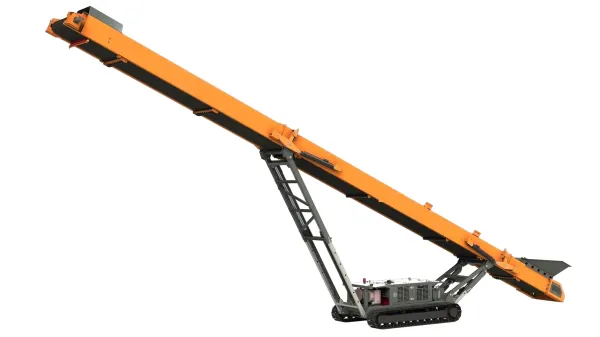
This is foldable design radial stacker for bulk material stockpiling.
3. Reduced Labor Requirements (or Better Use of Labor)
Rehandling isn't just about machines—it's about people.
Without a radial stacker:
- Operators are tied up managing piles
- Additional shifts may be needed during peak production
- Skilled labor is used for repetitive, low-value tasks
With a radial stacker:
- Stockpiling becomes largely automated
- Operators can be reassigned to higher-value work
- Staffing pressure is reduced
In regions where labor costs are rising or skilled operators are hard to find, this benefit becomes even more important.
4. Continuous Production Without Interruptions
One of the less obvious costs of rehandling is interruption.
When stockpiles fill up:
- Conveyors may need to stop
- Production slows down
- Equipment waits for loaders to catch up
A radial stacker keeps material moving by building a larger, more evenly distributed pile. That means:
- Fewer bottlenecks
- More consistent throughput
- Better overall plant efficiency
In high-capacity aggregate operations, even small interruptions can translate into significant lost revenue

This is a telescopic stacker for large volume stockpiling application.
5. Lower Material Degradation
Every time aggregate is moved, it's handled roughly—dropped, pushed, crushed under tires.
Rehandling can lead to:
- Increased fines
- Changes in material gradation
- Reduced product quality
By minimizing unnecessary movement, radial stackers help preserve the integrity of the material.
This is especially important for:
- High-spec aggregates
- Concrete and asphalt production
- Washed or graded materials
Better quality means fewer rejects and stronger customer satisfaction.
6. Less Dust, Cleaner Work Environment
Rehandling generates dust—plain and simple.
Loaders pushing dry material create:
- Airborne particles
- Visibility issues
- Environmental compliance challenges
A radial stacker reduces ground-level activity, which naturally cuts down dust generation.
The result:
- Cleaner air around the plant
- Improved working conditions
- Easier compliance with environmental regulations
7. Smarter Use of Space
Rehandling often becomes necessary because space isn't used efficiently.
Fixed discharge points create tall, narrow piles that quickly limit capacity. Radial stackers, by contrast, create wider, more uniform stockpiles.
That means:
- More material stored in the same area
- Less need to "make space" with loaders
- Better planning of stockyard layout
In tight sites, this can be a game-changer.
8. A Shift from Reactive to Proactive Operations
Perhaps the biggest benefit is less tangible, but just as important.
Without a radial stacker, stockpile management is reactive:
- Pile gets too big → send in loader
- Space runs out → move material
- Production slows → fix bottleneck
With a radial stacker, the process becomes proactive:
- Material is placed efficiently from the start
- Problems are prevented, not solved later
- Operations run smoother with less intervention
It's a small shift in equipment, but a big shift in mindset.
Reducing rehandling costs isn't about cutting corners—it's about removing unnecessary work from the system. A radial stacker does exactly that by letting the conveyor handle what loaders and dozers used to do manually.
- 600 TPH Radial Stacker for Slag Handling in Indonesian Steel Plant
- Benefits of Using a Radial Stacker for Bulk Material Stockpiling
- Radial Stacker vs Fixed Stacker: Which Stockpiling Solution Is Better
- 100 TPH Radial Stacker for Kaolin and Feldspar
- How Does a Radial Stacker Work?
- What is a Radial Stacker Conveyor?

Table of Contents

Leading Mobile Bulk Material Handling Equipment Manufacturer in China. A high-tech enterprise specializing in R&D and manufacturing of stacker conveyors, ship loaders, and bucket wheel reclaimers. We provide comprehensive mobile solutions, including mobile hopper feeders, truck unloaders (surface feeders), and transfer conveyors, alongside high-performance mobile crushing and screening plants for global bulk material processing.
How to Contact
- WhatsApp: +8617821512097
- E-mail: [email protected]
-
 Add: China

