
 REQUEST A QUOTE
 EN
EN English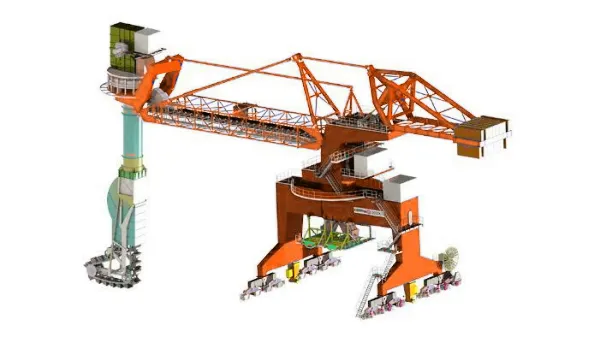
Just let we know what you want, and we will get in touch with you as soon as possible!

How to Choose the Right Ship Unloader for Coal, Grain, and Cement Ports
Choosing a ship unloader is not just about capacity on paper. For coal, grain, and cement ports, the right decision depends on material behavior, environmental requirements, vessel size, and how the terminal actually operates day to day. A system that works well for coal may be completely unsuitable for cement, while grain terminals often sit somewhere in between.

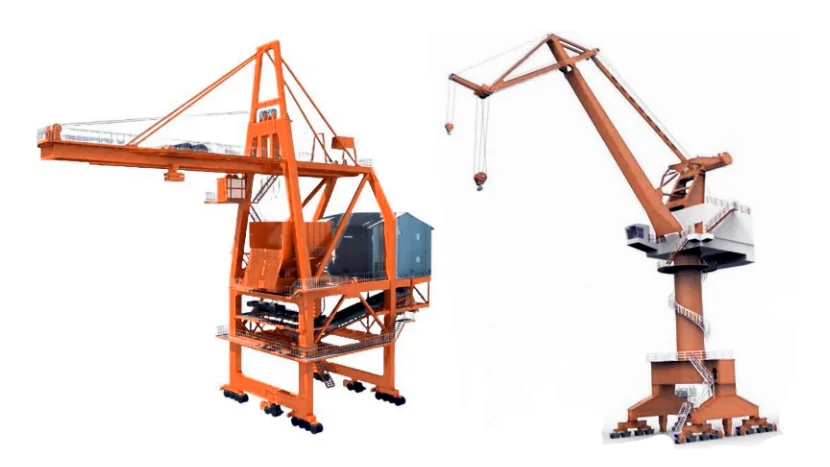
These are grab ship unloader for bulk material handling.
This article looks at the practical factors that matter most when selecting a ship unloader and explains how different unloader types fit real port conditions.
Understand Your Material First
Before looking at equipment types, it is essential to understand the material you are handling.
- Coal is abrasive and often dusty, but it flows relatively well when dry. Moist coal, however, can stick and bridge.
- Grain is light, free-flowing, and sensitive to breakage and contamination.
- Cement is very fine, dusty, and reacts quickly with moisture, making dust control and sealing critical.
Each of these materials places different demands on an unloading system. Ignoring this step often leads to underperforming or over-engineered equipment.
Coal Ports: Balancing Capacity and Durability
Coal terminals usually prioritize high throughput and mechanical robustness. Large vessels such as Panamax or Capesize require unloading rates that minimize berth occupancy.
For coal ports:
- Grab ship unloaders are common due to flexibility and relatively low capital cost.
- Continuous mechanical unloaders (bucket-chain or screw type) are preferred where dust control and consistent flow are required.
- Screw ship unloaders work well for enclosed or environmentally sensitive coal terminals but may need wear-resistant components.
Coal is abrasive, so wear protection on screws, buckets, and conveyors is critical. In many cases, the lowest purchase price becomes expensive over time due to maintenance and downtime.
Grain Ports: Cleanliness and Gentle Handling Matter
Grain ports operate under stricter cleanliness and contamination controls. Spillage, broken kernels, and dust explosions are serious concerns.
Common choices for grain terminals include:
- Continuous mechanical ship unloaders, especially bucket-chain systems, for high-capacity operations.
- Pneumatic ship unloaders for smaller terminals or where dust-free handling is critical.
- Screw ship unloaders for enclosed, controlled unloading with moderate capacity.
Grain flows easily, so extremely high mechanical forces are unnecessary. Instead, focus should be on smooth conveying paths, sealed transfer points, and easy cleaning between cargoes.
Cement Ports: Dust Control Is Non-Negotiable
Cement handling is less forgiving than coal or grain. Even small leaks can create serious dust problems and material loss.
For cement ports:
- Pneumatic ship unloaders are widely used because they provide fully enclosed, dust-free operation.
- Screw ship unloaders are a strong alternative where mechanical systems are preferred, especially for high bulk density materials.
- Grab systems are generally unsuitable due to excessive dust emissions.
Cement unloaders must interface well with silos, enclosed conveyors, and dust collection systems. Simplicity and sealing quality often matter more than maximum capacity.

This is a chain bucket ship unloader for bulk material handler.
Capacity and Throughput: Be Realistic
Rated capacity is often misunderstood. A ship unloader advertised at 1,500 t/h may only achieve that under ideal conditions.
Key questions to ask:
- What is the effective average unloading rate?
- How much time is lost to repositioning, trimming, and cleaning?
- Will the unloader handle partial loads and end-of-hold cleanup efficiently?
Continuous unloaders typically provide a more stable average throughput than grab systems, even if the peak capacity appears lower.
Environmental and Regulatory Requirements
Environmental regulations increasingly influence unloader selection. Dust limits, noise restrictions, and community concerns all play a role.
Ports facing strict environmental rules should consider:
- Fully enclosed unloading systems
- Integrated dust extraction and filtration
- Reduced material drop heights
- Electrically driven systems instead of diesel
In many cases, investing in a cleaner unloader avoids future retrofits and regulatory penalties.
Vessel Size and Berth Layout
The physical layout of the port can limit equipment choices:
- Short berths may restrict rail travel length.
- Narrow quays may not support large grab cranes.
- Older vessels may lack standardized discharge points.
Screw and pneumatic unloaders often require more precise positioning, while grab cranes offer greater reach. Understanding berth geometry early prevents costly redesigns later.

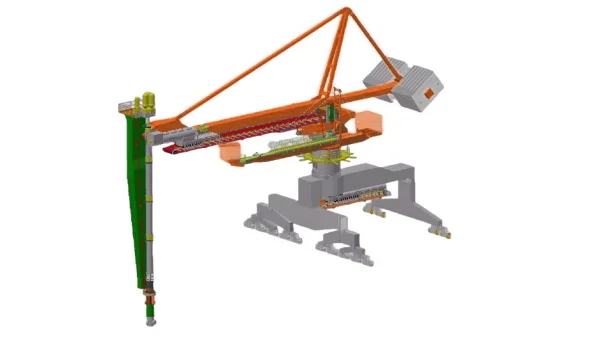
This is a screw ship unloader for bulk material.
Maintenance and Operating Costs
Initial purchase price is only part of the cost. Over a 15–25 year service life, maintenance, power consumption, and downtime often outweigh capital expenditure.
Screw and bucket-chain unloaders require planned maintenance but offer predictable operation. Grab systems rely heavily on cranes, ropes, and grabs, which can experience higher wear in harsh environments.
There is no single "best" ship unloader for coal, grain, and cement ports. The right choice depends on:
- Material characteristics
- Required capacity and vessel size
- Environmental standards
- Port layout and operating philosophy
Coal ports often focus on durability and throughput, grain ports on cleanliness and gentle handling, and cement ports on dust-free operation above all else.
A well-chosen ship unloader does more than unload cargo—it improves safety, reduces environmental impact, and lowers long-term operating costs. Taking the time to match the equipment to real operating conditions is the key to a successful investment.
- Screw Ship Unloader Parts List – Explained from Practical Site Experience
- Screw Ship Unloader for Dust-Free Bulk Handling
- Screw Ship Unloader vs. Grab Ship Unloader: A Comparison
- Large-capacity Coal Ship Unloader
- Continuous Ship Unloader for Bulk Materials Handling
- Mechanical Ship Unloader For Bulk Material Unloading

Table of Contents

Leading Mobile Bulk Material Handling Equipment Manufacturer in China. A high-tech enterprise specializing in R&D and manufacturing of stacker conveyors, ship loaders, and bucket wheel reclaimers. We provide comprehensive mobile solutions, including mobile hopper feeders, truck unloaders (surface feeders), and transfer conveyors, alongside high-performance mobile crushing and screening plants for global bulk material processing.
How to Contact
- WhatsApp: +8617821512097
- E-mail: [email protected]
-
 Add: China

